
Scrap Separation Plants
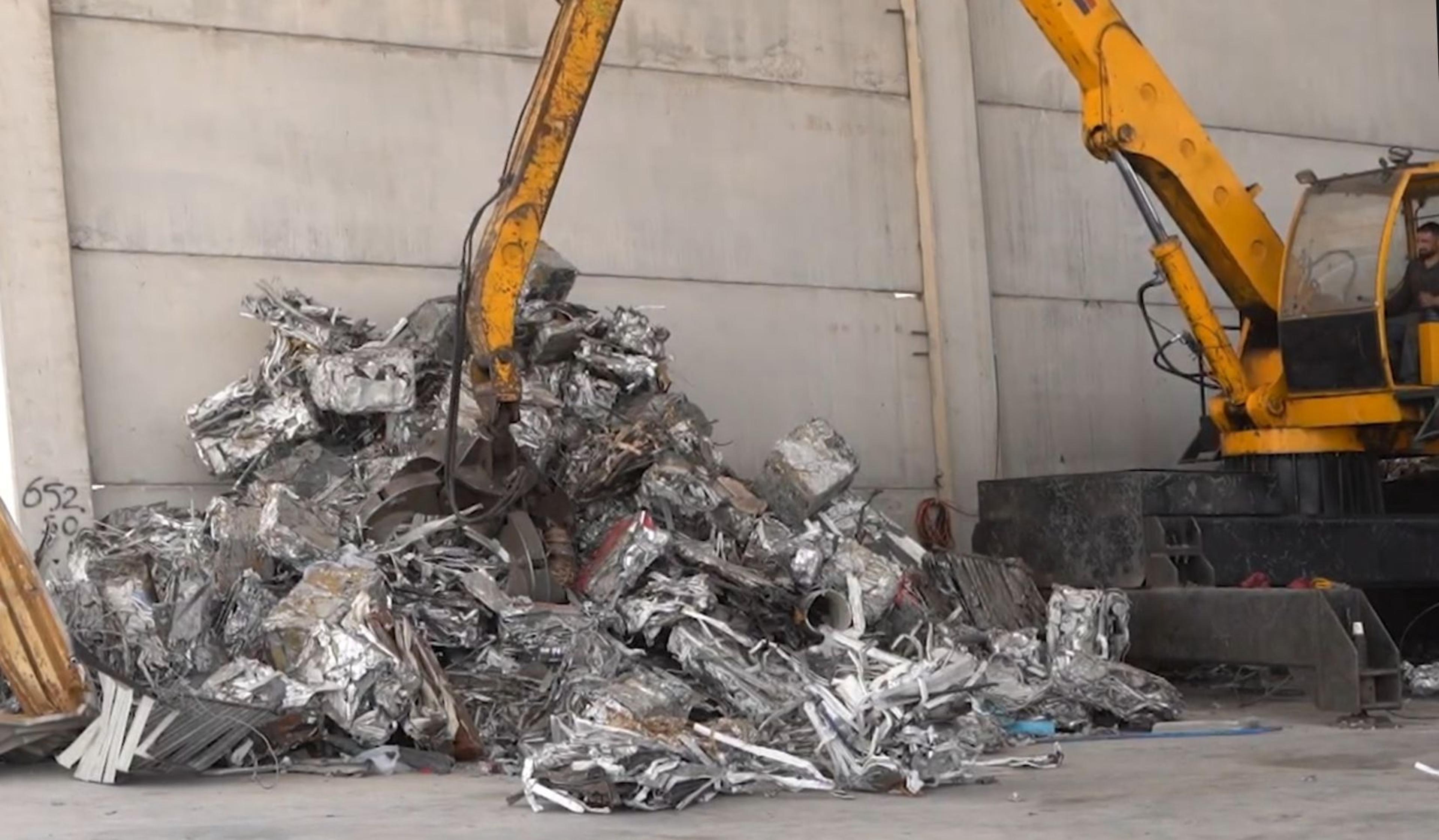
Aluminium Recycling Plants
Aluminium is readily recyclable, and today secondary aluminium accounts for nearly one-third of global aluminium consumption. BAS® Aluminium Recycling Plant — Ferrous / Non-Ferrous Metal Separation. To obtain the maximum yield from different scrap types, scrap must be optimised and prepared for processing, charging and melting; it must be possible to feed the furnace faster than its melting rate. Various scrap-preparation techniques such as hand sorting and size reduction are applied; some scrap may require multiple processing steps.
BAS Electromagnetic Drum & Overband Magnetic Separators (EMT, EMBS and MBS)
Magnetic separation is one method of separating non-ferrous components from ferrous ones, and it is widely used in the secondary aluminium preparation industry, with a broad range of separators available. The most common are BAS EMT electromagnetic drum separators, BAS EMBS (Electromagnetic Overband Metal Separators – BAS®) and BAS MBS (Permanent Overband Magnetic Separators – BAS®), and the choice may differ depending on the plant. Scrap travels on a conveyor belt and passes under overband metal separators equipped with permanent magnets or electromagnets; ferrous components subjected to the magnetic field are separated from the aluminium scrap, although the targeted Al scrap may still contain many impurities such as rubber, plastics, wood, attached components, etc.
BAS Dry Magnetic Drum Separators
BAS dry magnetic drum separators are a common type of equipment that separates magnetic particles from non-magnetic ones, or relatively strong magnetic particles from weaker ones, based on magnetic susceptibility, particle size and shape. This equipment (Dry Magnetic Drum Separators – BAS®) is widely used in iron-ore mineral beneficiation, separation of magnetic materials from steelmaking slags, purification of non-metallic ores, food and plastics processing, and aluminium and iron-and-steel recycling plants.
BAS ECS Eddy Current Non-Ferrous Metal Separators
These devices are based on inducing eddy currents in metals. Per Faraday's law, electromotive forces perpendicular to the magnetic field are generated. When the magnetic field passes through a conductive material, the induced EMFs — i.e. eddy currents — produce currents within the material that depend on its conductivity. BAS ECS Eddy Current non-ferrous metal separators (Eddy Current Non-Ferrous Metal Separators – BAS®) can be considered as a conveyor belt with a special magnetic field at its head. As non-ferrous metals approach the magnetic field they are ejected and directed into a dedicated collection chute, while inert materials drop freely into another chute. Metals of different conductivity produce different eddy currents and are thrown different distances. By placing collectors at these distances along the rotor, the scrap stream can be separated from the bulk material. This technique is increasingly used in the recycling industry as it allows high-value metals to be recovered with great selectivity.
For details of aluminium scrap separation processes, contact the BAS team.
Related Contents