
Slag Beneficiation Plants
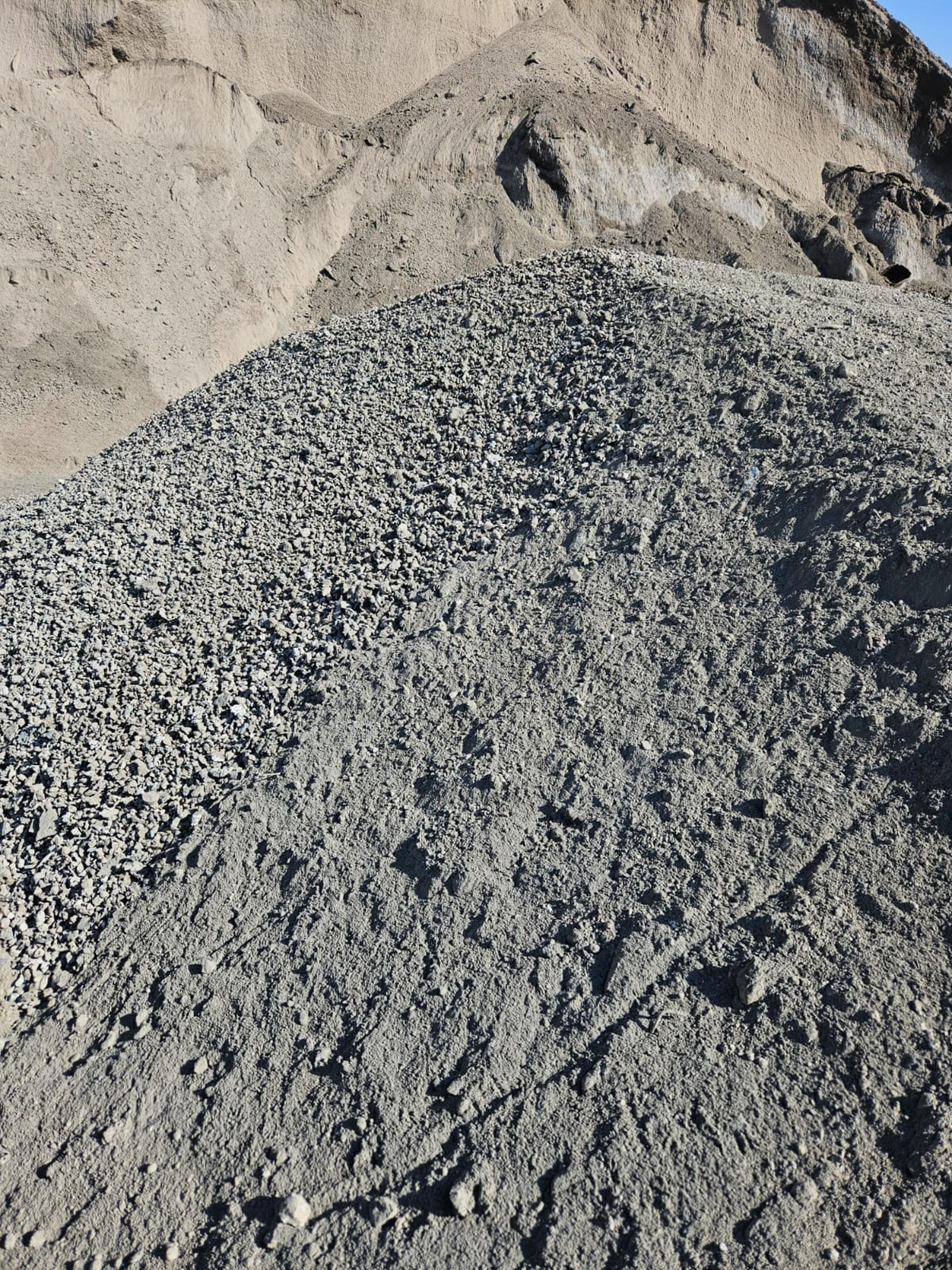
Aluminium Slag Beneficiation
Aluminium slag consists of aluminium, aluminium oxide, scrap and alloying elements, plus other metal oxides, alkaline and halogenated compounds depending on the fluxes used. A defining feature of aluminium slag is that it traps metal droplets within lattice-like oxide structures, exhibiting thixotropic behaviour during melting. The trapped droplets are the main cause of metallic aluminium loss during melting. Recoverable metal content depends on melting, slag-cooling and slag-remelting operations. During cooling, thermite reactions of fine aluminium particles typically cause 1–2% per minute of metallic aluminium loss.
Aluminium slag types can be classified as follows:
• White dross: Slag formed at low flux usage — about 1.5–3% of the melted scrap charge. Metal content is between 25–45%.
• Skim (Rich slag): Slag taken from melting furnaces without fluxing, slag taken from melting and holding furnaces after refining, slag formed in launders and tundishes during transfer and casting, and slag scraped from ingot surfaces during ingot casting. Metal content is between 50–90%. Although classified separately in some literature, it may also be considered within the white dross category.
• Black dross: Slag that is physically difficult to melt and is formed with excessive flux usage (5–10% of the melted charge). Metal content is between 15–35%.
• Salt Cake (Rotary Furnace Slag): Slag formed in rotary furnaces during melting under molten flux, with excessive flux usage (8–20% of the melted charge) and cryolite (0.05–0.07% of the melted charge after melting). Metal content is between 8–15%.
Aluminium slag is not waste but a by-product with economic value due to its metallic aluminium content. The main purpose of slag valorisation is therefore to recover the metallic aluminium and to convert the resulting secondary slag into an environmentally safe form, generating economic value from the slag.
Size reduction (crushing, grinding) is important for liberating aluminium particles and aluminium-bearing minerals from the slag. After liberation, the crushed aluminium slag is subjected to magnetic separation — typically using overband metal separators, dry magnetic drum separators and perm-roller magnetic separators. Finally, the desired final aluminium product and tailings are obtained using ECS eddy-current non-ferrous metal separators.
The engineering and design of plants that separate impurities from aluminium slag and produce final products with the desired physical and chemical properties is carried out by BAS laboratories and engineers 24/7. Mineralogical studies and laboratory production for all types of aluminium slag are provided by us. Since aluminium slag varies with the application process and raw-material characteristics, laboratory work and pilot production are essential for finding the right solution. BAS delivers field-application results with limited tolerance based on the test results applied to customer samples.
Contact us for the most economical operation across all aluminium slag types. Accurate slag mineralogy, particle liberation degree, particle size distribution and the right beneficiation tests applied to the sample are the main criteria for project success.
BAS provides the slag-recovery process flow design, full engineering and the correct magnetic separation steps as a turn-key scope.
Related Contents